

Paint Haloing: What It Is & What It Isn't
Posted by BoatZincs.com on 2026 Sep 24th
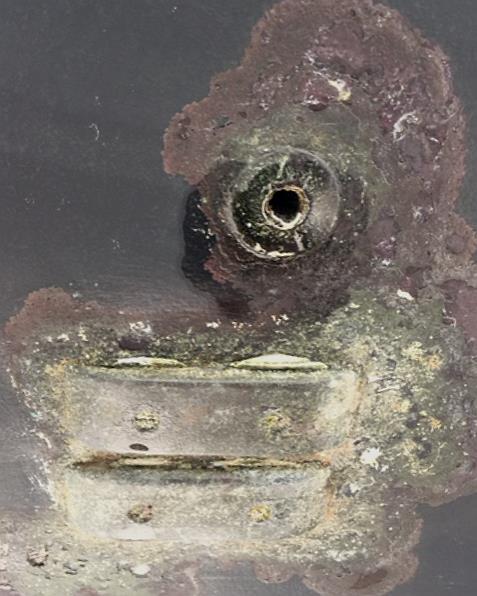
Here's one we're asked about a lot, something that's often interpreted as a symptom of electrolytic corrosion, but which nearly always has a simpler cause behind it.
Paints that make use of cuprous oxide as an active antifouling ingredient are likely to break down when applied directly to a boats' underwater metals. Think struts, seacocks, thru-hulls, or trim tabs. The driving force behind that are all the electrons your sacrificial anodes are giving off. The movement of these ions instigates the release of hydrogen gas in the water, which will build up on and under the paint coating. This destroys the paint's resin, its binder, resulting in visually dramatic blistering, peeling, or haloing around the protected metal.
So, it's a byproduct of a functioning galvanic cell, a result of your anodes working the way they need to in order to shift the potential of your cathode metals into a protected state (that's a -200mV shift, by the way). But what can be done to stop the paint from being a casualty of that process? Here's the trick: apply two coats of a suitable primer over/around your underwater metals before appyling any antifouling paint. Let it cure to the manufacturers' recommendations and then paint. This will create an insulating barrier, one that'll prevent that electron transfer and stop paint haloing from ever materializing.
 So, it's a byproduct of a functioning galvanic cell, a result of your anodes working the way they need to in order to shift the potential of your cathode metals into a protected state (that's a -200mV shift, by the way). But what can be done to stop the paint from being a casualty of that process? Here's the trick: apply two coats of a suitable primer over/around your underwater metals before appyling any antifouling paint. Let it cure to the manufacturers' recommendations and then paint. This will create an insulating barrier, one that'll prevent that electron transfer and stop paint haloing from ever materializing.